Sunday, February 2, 2020

Q3 Week 1 in Review

GRADES K-3 DAILY "BELL WORK" FOR  QUARTER 2 WEEK 1


The Great Wave 


Whaling off the Goto Island


View of Honmoku off Kanagawa
Katsushika Hokusai 

All students complete "bell work" at the start of each class before any other instructions are given.  As soon as students are seated, they are to immediately put pencil to paper and begin drawing the image projected before them;  no questions, no comments; no distractions.  

During this second semester, I have started class by asking students to sit completely silent, resting chin in hands, looking/gazing at the artwork projected before them.  I set my watch timer for one minute.  All that I ask is for one minute of complete and total absorption of the image before them.  


It is proving a great way to calm and center them for the start of class, and I enjoy not talking as well!


During Bell work, all attention is focused on looking carefully and recording what students SEE.

This is SILENT work time.  Students are working independently, although I often interject with some guidance and state simple parameters.  Students are graded primarily on their efforts and participation, not entirely on the outcome of their drawing.

After drawing, we have a brief class discussion to learn more about the artwork.  We make some guesses at to what the work may be about; what the story may be behind the work.  We THINK about how the artist used line, color, shapes, etc. to communicate meaning and emotion.  We discuss how we may not all respond to the art work in the same way.  

The final step in our Bell Work exercise is to ask ourselves more questions about the art work.  We WONDER what the artist intended to communicate.  This is where Ms. Northway may need to do some research to share what she learned about the artist and her/his life experiences.  

 I typically show students three artworks by the same artist.  In this way, they become familiar with the style of a particular artist, and often can recall the artist's name. All of the children's drawings will be glued into small weekly/bi-weekly books to bring home.


PLEASE KEEP YOUR CHILD'S WEEKLY BOOKS IN A SAFE PLACE (in a BIG 3 RING BINDER) SO YOU CAN SEE GROWTH THROUGHOUT THE YEAR. 

UPCOMING "BELL WORK" FOR Q3 WEEK 2:


Paul Cezanne

Detail of Four Apples (1881)


 Paul Cezanne
The Bay of Marseilles, Seen from L'Estaque
 (1885)


Paul Cezanne
   Mont Sainte-Victoire with Large Pine (1887)


K-3  PROJECTS:  Q3 WEEK 1

KINDER

Elements of Art - Shape, Color

This week students finished their self-portraits and we began learning about Paul Cézanne.  I read the children's book Cézanne and the Apple Boy.

Students worked in pairs to begin making a paper maché apple.  Brown lunch bags were smashed into balls and taped into circles with masking tape.

In the upcoming week, students will be using paste and paint to complete a collaborative still life of paper maché apples. 
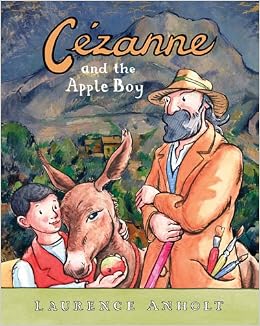
Image result for cezanne and the apple boy"

Project: Copy of Van Gogh's Sunflowers
Elements of Art - Color, Texture


Students are nearly finished with their Sunflower oil pastel drawings and will begin creating a drawing (with chalk pastels) based on the image below:


Ambrogio Lorenzetti | Allegory and Effects of Good and Bad Government


GRADE 2

Project: Greek Vessels
Elements of Art - Line, Shape


Pottery aryballos decorated with a deer hunt.  Pottery alabastron decorated with a lion and two griffins.
Corinthian Period of Greek Pottery Design

Students are finished with their Greek vessels and are "framing" on black paper, in preparation for Fine Art Night in May.  

We are beginning a relief printing project, with Texas fish as our source imagery.                  

Rio Grande Cichlid

                                       
Guadalupe Bass


GRADE 3
The Celtic Letter project will be completed soon!  Students are adding final touches.... This has been an extended project with many layers of color and much time involved in developing original designs. Work has been inspired by close observation of source imagery saved in sketchbooks. 


The students' next assignment will be to copy a Rose Window.  
Since we are at the beginning of a new decade, I specifically chose rose windows to copy that are based on the geometry of a Decagon.


Image result for rose window sens cathedral france"
Rose Window Sens Cathedral, France 1140-1164

Image result for creation rose window"
The Creation Rose Window - The National Cathedral in Washington D.C.
Link:  https://cathedral.org/what-to-see/exterior/rose-window/

Sunday, January 26, 2020

Q2 Week 10 in Review

GRADES K-3 DAILY "BELL WORK" FOR  QUARTER 2 WEEK 10


John James Audubon 

 Carolina Turtle Dove

After bell work, students use sketchbooks for more extensive, ongoing projects.


All students complete "bell work" at the start of each class before any other instructions are given.  As soon as students are seated, they are to immediately put pencil to paper and begin drawing the image projected before them;  no questions, no comments; no distractions.  

****(Kinder will begin doing bell work near the end of second quarter)

All attention is focused on looking carefully and recording what students SEE.

This is SILENT work time.  Students are working independently, although I often interject with some guidance and state simple parameters.  Students are graded primarily on their efforts and participation, not entirely on the outcome of their drawing.

After drawing, we have a brief class discussion to learn more about the artwork.  We make some guesses at to what the work may be about; what the story may be behind the work.  We THINK about how the artist used line, color, shapes, etc. to communicate meaning and emotion.  We discuss how we may not all respond to the art work in the same way.  

The final step in our Bell Work exercise is to ask ourselves more questions about the art work.  We WONDER what the artist intended to communicate.  This is where Ms. Northway may need to do some research to share what she learned about the artist and her/his life experiences.  

 I typically show students three artworks by the same artist.  In this way, they become familiar with the style of a particular artist, and often can recall the artist's name. All of the children's drawings will be glued into small weekly/bi-weekly books to bring home.


PLEASE KEEP YOUR CHILD'S WEEKLY BOOKS IN A SAFE PLACE (and ordered in a BIG 3 RING BINDER) SO YOU CAN SEE GROWTH THROUGHOUT THE YEAR. 

UPCOMING "BELL WORK" FOR Q3 WEEK 1:


The Great Wave 


Whaling off the Goto Island
View of Honmoku off Kanagawa

K-3  PROJECTS:  Q2 WEEK 10

KINDER

Elements of Art - Shape, Color

This week students colored in their drawings with markers, copying the clothing and background for either the portrait of the boy or the girl.  

The markers will be the first layer of color.  The next layers will be with tempera paint, grease pencils for outlines, chalk for some soft surface details and oil pastels for the hair and areas of clothing and background.  


Amedeo Modigliani
Project: Copy of Van Gogh's Sunflowers
Elements of Art - Color, Texture


First graders finished drawing a full page copy of Van Gogh's Sunflowers.  After completing the drawing, they rubbed a thick amount of white oil pastels onto backside the of the paper.  
This is a simple image transfer technique (similar to using carbon or graphite paper).  

This coming week, we will transfer the drawing onto a toned brown paper by tracing over the image layered over the brown paper, to receive the imprint of the sticky oil pastel.  By transferring the drawing this way, we will avoid the problem of any grey pencil lines to dull down the bright yellows and blues of the oil pastels.

GRADE 2

Project: Greek Vessels
Elements of Art - Line, Shape

This past week, students traced their pottery designs with a black grease pencil.  They will continue to add neutral colors with Conté Crayon and then finish by "burnishing" or polishing the surface of the drawing. (The grease pencil will create a shiny surface). 

This project was an opportunity for students to design their own Greek Vessel, while still copying various elements from source imagery of vessels, glued into their sketchbooks.


Pottery aryballos decorated with a deer hunt.  Pottery alabastron decorated with a lion and two griffins.
Corinthian Period of Greek Pottery Design

  https://www.britishmuseum.org/research/collection_online/collection_object_details/collection_image_gallery.aspx?assetId=294566001&objectId=399477&partId=1


 Related image


GRADE 3

The Celtic Letter project will be completed soon!  This has been an extended project  with many layers of color and much time involved in developing original designs. Work has been inspired by close observation of source imagery saved in sketchbooks. 

Monday, January 20, 2020

Q2 Week 9 in Review

GRADES K-3 DAILY "BELL WORK" FOR  QUARTER 2 WEEK 10


Ziggurat of Ur


  Guennol Lioness
  Unknown sculptor of the Proto-Elamite culture
c. 3000–2800 BC


Tell Asmar statue
(Standing Male Worshiper)


After bell work, students use sketchbooks for more extensive, ongoing projects.


All students complete "bell work" at the start of each class before any other instructions are given.  As soon as students are seated, they are to immediately put pencil to paper and begin drawing the image projected before them;  no questions, no comments; no distractions.  

****(Kinder will begin doing bell work near the end of second quarter)

All attention is focused on looking carefully and recording what students SEE.

This is SILENT work time.  Students are working independently, although I often interject with some guidance and state simple parameters.  Students are graded primarily on their efforts and participation, not entirely on the outcome of their drawing.

After drawing, we have a brief class discussion to learn more about the artwork.  We make some guesses at to what the work may be about; what the story may be behind the work.  We THINK about how the artist used line, color, shapes, etc. to communicate meaning and emotion.  We discuss how we may not all respond to the art work in the same way.  

The final step in our Bell Work exercise is to ask ourselves more questions about the art work.  We WONDER what the artist intended to communicate.  This is where Ms. Northway may need to do some research to share what she learned about the artist and her/his life experiences.  

 I typically show students three artworks by the same artist.  In this way, they become familiar with the style of a particular artist, and often can recall the artist's name. All of the children's drawings will be glued into small weekly/bi-weekly books to bring home.


PLEASE KEEP YOUR CHILD'S WEEKLY BOOKS IN A SAFE PLACE (and ordered in a BIG 3 RING BINDER) SO YOU CAN SEE GROWTH THROUGHOUT THE YEAR. 

UPCOMING "BELL WORK" FOR Q3 WEEK 1:


  John James Audubon 
 Carolina Turtle Dove

K-3  PROJECTS:  Q3 WEEK 1

KINDER

Elements of Art - Shape, Color

This week students colored in their drawings with markers, copying the clothing and background for either the portrait of the boy or the girl.  

The markers will be the first layer of color.  The next layers will be with tempera paint, grease pencils for outlines, chalk for some soft surface details and oil pastels for the hair and areas of clothing and background.  


Amedeo Modigliani
Project: Copy of Van Gogh's Sunflowers
Elements of Art - Color, Texture


First graders finished drawing a full page copy of Van Gogh's Sunflowers.  After completing the drawing, they rubbed a thick amount of white oil pastels onto backside the of the paper.  
This is a simple image transfer technique (similar to using carbon or graphite paper).  

This coming week, we will transfer the drawing onto a toned brown paper by tracing over the image layered over the brown paper, to receive the imprint of the sticky oil pastel.  By transferring the drawing this way, we will avoid the problem of any grey pencil lines to dull down the bright yellows and blues of the oil pastels.

GRADE 2

Project: Greek Vessels
Elements of Art - Line, Shape

This past week, students traced their pottery designs with a black grease pencil.  They will continue to add neutral colors with Conté Crayon and then finish by "burnishing" or polishing the surface of the drawing. (The grease pencil will create a shiny surface). 

This project was an opportunity for students to design their own Greek Vessel, while still copying various elements from source imagery of vessels, glued into their sketchbooks.


Pottery aryballos decorated with a deer hunt.  Pottery alabastron decorated with a lion and two griffins.
Corinthian Period of Greek Pottery Design

  https://www.britishmuseum.org/research/collection_online/collection_object_details/collection_image_gallery.aspx?assetId=294566001&objectId=399477&partId=1


 Related image


GRADE 3

The Celtic Letter project will be completed soon!  This has been an extended project  with many layers of color and much time involved in developing original designs. Work has been inspired by close observation of source imagery saved in sketchbooks. 

Q2 Week 8 in Review

GRADES K-3 DAILY "BELL WORK" FOR  QUARTER 2 WEEK 9


Olmec Colossal Head

 900 BC

  Olmec Colossal Head
    900 BC
 Olmec Ceramic Baby


   900 BC

After bell work, students use sketchbooks for more extensive, ongoing projects.


All students complete "bell work" at the start of each class before any other instructions are given.  As soon as students are seated, they are to immediately put pencil to paper and begin drawing the image projected before them;  no questions, no comments; no distractions.  

****(Kinder will begin doing bell work near the end of second quarter)

All attention is focused on looking carefully and recording what students SEE.

This is SILENT work time.  Students are working independently, although I often interject with some guidance and state simple parameters.  Students are graded primarily on their efforts and participation, not entirely on the outcome of their drawing.

After drawing, we have a brief class discussion to learn more about the artwork.  We make some guesses at to what the work may be about; what the story may be behind the work.  We THINK about how the artist used line, color, shapes, etc. to communicate meaning and emotion.  We discuss how we may not all respond to the art work in the same way.  

The final step in our Bell Work exercise is to ask ourselves more questions about the art work.  We WONDER what the artist intended to communicate.  This is where Ms. Northway may need to do some research to share what she learned about the artist and her/his life experiences.  

 I typically show students three artworks by the same artist.  In this way, they become familiar with the style of a particular artist, and often can recall the artist's name. All of the children's drawings will be glued into small weekly/bi-weekly books to bring home.


PLEASE KEEP YOUR CHILD'S WEEKLY BOOKS IN A SAFE PLACE (and ordered in a BIG 3 RING BINDER) SO YOU CAN SEE GROWTH THROUGHOUT THE YEAR. 

UPCOMING "BELL WORK" FOR Q2 WEEK 10:


Ziggurat of Ur


  Guennol Lioness
  Unknown sculptor of the Proto-Elamite culture
c. 3000–2800 BC


Tell Asmar statue

(Standing Male Worshiper)


K-3  PROJECTS:  WEEK 9

KINDER

Elements of Art - Shape, Color

This week students colored in their drawings with markers, copying the clothing and background for either the portrait of the boy or the girl.  

The markers will be the first layer of color.  The next layers will be with tempera paint, grease pencils for outlines, chalk for some soft surface details and oil pastels for the hair and areas of clothing and background.  


Amedeo Modigliani
Project: Copy of Van Gogh's Sunflowers
Elements of Art - Color, Texture


First graders finished drawing a full page copy of Van Gogh's Sunflowers.  After completing the drawing, they rubbed a thick amount of white oil pastels onto backside the of the paper.  
This is a simple image transfer technique (similar to using carbon or graphite paper).  

This coming week, we will transfer the drawing onto a toned brown paper by tracing over the image layered over the brown paper, to receive the imprint of the sticky oil pastel.  By transferring the drawing this way, we will avoid the problem of any grey pencil lines to dull down the bright yellows and blues of the oil pastels.

GRADE 2

Project: Greek Vessels
Elements of Art - Line, Shape

This past week, students traced their pottery designs with a black grease pencil.  They will continue to add neutral colors with Conté Crayon and then finish by "burnishing" or polishing the surface of the drawing. (The grease pencil will create a shiny surface). 

This project was an opportunity for students to design their own Greek Vessel, while still copying various elements from source imagery of vessels, glued into their sketchbooks.


Pottery aryballos decorated with a deer hunt.  Pottery alabastron decorated with a lion and two griffins.
Corinthian Period of Greek Pottery Design

  https://www.britishmuseum.org/research/collection_online/collection_object_details/collection_image_gallery.aspx?assetId=294566001&objectId=399477&partId=1


 Related image


GRADE 3

The Celtic Letter project will be completed soon!  This has been an extended project  with many layers of color and much time involved in developing original designs. Work has been inspired by close observation of source imagery saved in sketchbooks. 

THE PRINCIPLES OF DESIGN - HOW WE ORGANIZE ART and LIFE

Wk 10 VIDEO Link As we all have been spending much more time at home, you may have also spent a little more time organizing your living sp...