Friday, November 1, 2019

Q2 Week 2 in Review

GRADES 1-2 DAILY "BELL WORK" FOR  QUARTER 2, WEEK 2 


 Frontispiece of the Codex Mendoza 
 Viceroyalty of New Spain 
(1541–1542)

 
Codex Mendoza 
   Viceroyalty of New Spain 
 (1541–1542)

Mosaic of a Double-headed Serpent
15th-16th century
Cedrela wood, Turquoise, Pine resin, Oyster 
Shell, Hematite, and Copal


All students complete "bell work" at the start of each class before any other instructions are given.  As soon as students are seated, they are to immediately put pencil to paper and begin drawing the image projected before them;  no questions, no comments; no distractions.  

****(Kinder will begin doing bell work near the end of second quarter)

All attention is focused on looking carefully and recording what students SEE.

This is SILENT work time.  Students are working independently, although I often interject with some guidance and state simple parameters.  Students are graded primarily on their efforts and participation, not entirely on the outcome of their drawing.

After drawing, we have a brief class discussion to learn more about the artwork.  We make some guesses at to what the work may be about; what the story may be behind the work.  We THINK about how the artist used line, color, shapes, etc. to communicate meaning and emotion.  We discuss how we may not all respond to the art work in the same way.  

The final step in our Bell Work exercise is to ask ourselves more questions about the art work.  We WONDER what the artist intended to communicate.  This is where Ms. Northway may need to do some research to share what she learned about the artist and her/his life experiences.  

 I typically show students three artworks by the same artist.  In this way, they become familiar with the style of a particular artist, and often can recall the artist's name. All of the children's drawings will be glued into small weekly/bi-weekly books to bring home.


PLEASE KEEP YOUR CHILD'S WEEKLY BOOKS IN A SAFE PLACE (and ordered in a BIG 3 RING BINDER) SO YOU CAN SEE GROWTH THROUGHOUT THE YEAR. 

UPCOMING "BELL WORK" FOR WEEK 3 Q2

Imagery from The Book of Kells:

//


After bell work, students use sketchbooks for more extensive, ongoing projects.

K-3  PROJECTS:  WEEK 2


KINDER

Project: Notan: Cut Paper Designs in Black and White

Elements of Art - Shape


Tessellations from Week 1


During Week 2, students created cut paper Notan designs.  Some are on display on the hallway bulletin board:

Image result for Notan book
Hallway Display of cut paper "Notans"

LINK:

We put thirty spokes together and call it a wheel; 
But it is on the space where there is nothing that the usefulness of the wheel depends. 

We turn clay to make a vessel; 
But it is on the space where there is nothing that the usefulness of the vessel depends. 

We pierce doors and windows to make a house; 
And it is on these spaces where there is nothing that the usefulness of the house depends. 

Therefore just as we take advantage of what is, we should recognize the usefulness of what is not. 

                                                                                                                      Lao Tzu


FIRST

Line Drawings: Pablo Picasso 
Elements of Art - Line


In a follow-up to the continuous line drawings of animals by Picasso, students will be learning how to do an upside down drawing.

No, I will not ask your children to stand on their heads to complete this task!
 Instead, I will show them an image of each of the drawings above by slowly revealing the drawing from under a piece of paper.  The drawing will be turned upside down, and slowly revealed as students draw, not knowing what it is they are drawing until the image is complete and paper turned right side up.  

This is an old drawing exercise that has been around many years.  

Think of your child when they were toddlers and how he/she may have thought it fun to bend at the waist......in their diapers...... and look at the world from an upside down point of view.  
It's never a bad idea to learn to look at things from a new angle/perspective; taking a slower, more contemplative look.  


GRADE 2

Project: Greek Vessels

Students began creating their own template of an ancient Greek Vessel.  This beginning phase of copying the outline and shape of the vessel has been painstakingly slow.  The reward for their diligent efforts will be the decorating phase of this project -- drawing griffins, lions and horses onto their Greek vessels. 

Students are learning how to correctly duplicate the correct proportions of the pottery image projected before them, onto their own paper.  (following along with their teacher, step by step). 

This method of enlarging and copying an image of pottery is achieved by learning how to grid their work surface to accurately enlarge the scale -- while keeping the same  proportions.

In the coming week, students will cut out their symmetrical template and trace shape onto good quality paper to decorate with designs inspired by the Corinthian period of Greek pottery. 

Pottery aryballos decorated with a deer hunt.  Pottery alabastron decorated with a lion and two griffins.
  https://www.britishmuseum.org/research/collection_online/collection_object_details/collection_image_gallery.aspx?assetId=294566001&objectId=399477&partId=1

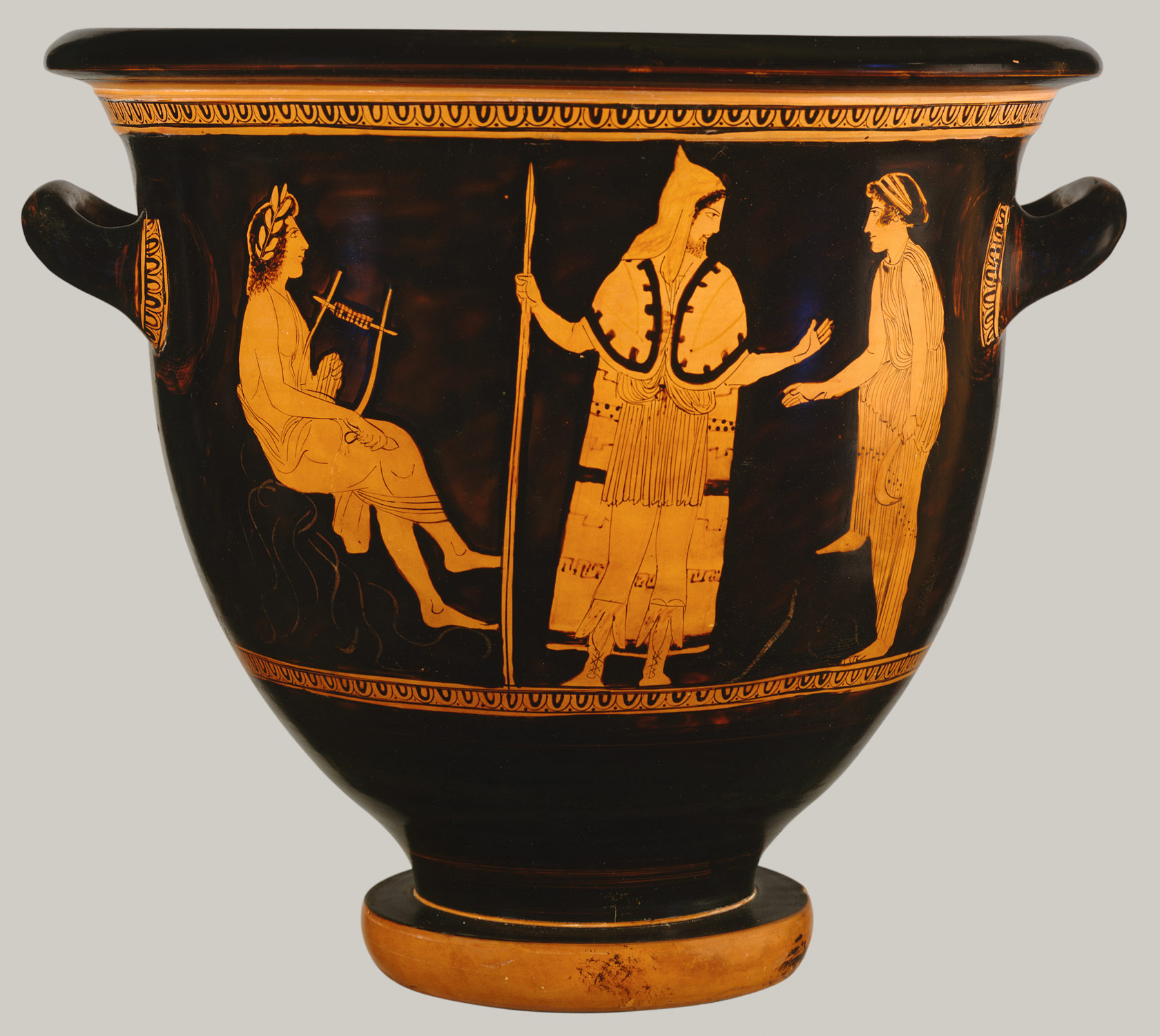
Image result for proto  corinthian griffin pottery


Image result for red figure Related image


GRADE 3

Elements of Art - Line (contour drawing practice); Space (overlapping)

Project:  Celtic Initials - Inspired by the Book of Kells


(Letter T)

Image result for celtic illuminated initial book of kells


(Teacher Demo - Letter C)


All of the students' drawings, or "studies" of ribbons, knots and zoomorphic Celtic animal heads.....are beginning to coalesce into their own Celtic inspired initials.

This week, students began drawing a meandering ribbon  attached to a stylized animal head, twisting and turning around the first initial to their name.


As students worked, I prompted them to refer back to their previous drawing studies and handouts in their sketchbooks.  


In the coming weeks, students will copy their completed sketch and then COPY AGAIN onto a good quality, toned tan mixed media paper. 


Saturday, October 26, 2019

Q2 - Week 1 in Review

GRADES 1-2 DAILY "BELL WORK" FOR WEEK 1 
(Quarter 2)


All students complete "bell work" at the start of each class before any other instructions are given.  As soon as students are seated, they are to immediately put pencil to paper and begin drawing the image projected before them;  no questions, no comments; no distractions.  

****(Kinder will begin doing bell work near the end of second quarter)

All attention is focused on looking carefully and recording what students SEE.

This is SILENT work time.  Students are working independently, although I often interject with some guidance and state simple parameters.  Students are graded primarily on their efforts and participation, not entirely on the outcome of their drawing.

After drawing, we have a brief class discussion to learn more about the artwork.  We make some guesses at to what the work may be about; what the story may be behind the work.  We THINK about how the artist used line, color, shapes, etc. to communicate meaning and emotion.  We discuss how we may not all respond to the art work in the same way.  

The final step in our Bell Work exercise is to ask ourselves more questions about the art work.  We WONDER what the artist intended to communicate.  This is where Ms. Northway may need to do some research to share what she learned about the artist and her/his life experiences.  

 I typically show students three artworks by the same artist.  In this way, they become familiar with the style of a particular artist, and often can recall the artist's name. All of the children's drawings will be glued into small weekly/bi-weekly books to bring home.


PLEASE KEEP YOUR CHILD'S WEEKLY BOOKS IN A SAFE PLACE (and ordered in a BIG 3 RING BINDER) SO YOU CAN SEE GROWTH THROUGHOUT THE YEAR.  


UPCOMING "BELL WORK" FOR WEEK 2 Q2


The Codex Mendoza


Around 1541, the first viceroy of New Spain, Antonio de Mendoza, commissioned a codex to record information about the Aztec empire. The codex, now known as the Codex Mendoza, contained information about the lords of Tenochtitlan, the tribute paid to the Aztecs, and an account of life “from year to year.” The artist or artists were indigenous, and the images were often annotated in Spanish by a priest that spoke Nahuatl, the language spoken by the Nahuas (the ethnic group to whom the Aztecs belonged). Viceroy Mendoza intended to send the Codex to the Spanish King, Emperor Charles V of Spain, although it never made it to Spain; French pirates acquired the Codex and it ended up in France. Upon its appearance in sixteenth-century France, it was acquired by André Thevet, the cosmographer to King Henry II of France, and Thevet included his name on several pages, including at the top of the Codex Mendoza’s frontispiece.


After bell work, students use sketchbooks for more extensive, ongoing projects.

K-3  PROJECTS:  WEEK 1


KINDER

Project: Tessellations

Elements of Art - Shape

Image result for simple slide tessellation

Before fall break, students drew a zig-zag line on one side of a square piece of card stock.  They then cut the piece out themselves.  I assisted taping the small piece to the other side of their template.

This week, we began tracing the shape with a crayon to create a wax resist line to fill with a wash of watercolors in an analogous color scheme (red, orange and yellow). 

FIRST

Continuous Line Drawings, after Picasso 
Elements of Art - Line

    Image result for picasso animal line drawings

Book read in class: Picasso and the Girl with the Ponytail:   


 Image result for Picasso and the Girl with the Ponytail


GRADE 2 

Project: Illuminated Letters

Elements of Art - Line, Shape, Color, Space

GRADE 3

Elements of Art - Line (contour drawing practice); Space (overlapping)

Project:  Celtic Initials - Inspired by the Book of Kells


(Letter T)

Image result for celtic illuminated initial book of kells


(Teacher Demo - Letter C)

Before Fall Break, students drew a small "study" in their sketchbooks of twisted and overlapping pieces of ribbon and knotted rope.  This week, we began sketching out the first Initials of our first name.  This is taking some practice to get correct.  


Once we have the initial drawn in the unique style of the celtic font, we will begin drawing a meandering ribbon attached to a stylized animal head.

Sunday, October 13, 2019

Week 9 in Review

GRADES 1-3 DAILY "BELL WORK" FOR WEEK NINE


Fine Wind, Clear Morning (also known as South Wind, Clear Sky or Red Fuji)


Cushion Pine at Aoyama


Fuji seen through the Mannen bridge at Fukagawa

All students complete "bell work" at the start of each class before any other instructions are given.  As soon as students are seated, they are to immediately put pencil to paper and begin drawing the image projected before them;  no questions, no comments; no distractions.  

****(Kinder will begin doing bell work near the end of second quarter)

All attention is focused on looking carefully and recording what students SEE.

This is SILENT work time.  Students are working independently, although I often interject with some guidance and state simple parameters.  Students are graded primarily on their efforts and participation, not entirely on the outcome of their drawing.

After drawing, we have a brief class discussion to learn more about the artwork.  We make some guesses at to what the work may be about; what the story may be behind the work.  We THINK about how the artist used line, color, shapes, etc. to communicate meaning and emotion.  We discuss how we may not all respond to the art work in the same way.  

The final step in our Bell Work exercise is to ask ourselves more questions about the art work.  We WONDER what the artist intended to communicate.  This is where Ms. Northway may need to do some research to share what she learned about the artist and her/his life experiences.  

 I typically show students three artworks by the same artist.  In this way, they become familiar with the style of a particular artist, and often can recall the artist's name. All of the children's drawings will be glued into small weekly/bi-weekly books to bring home.


PLEASE KEEP YOUR CHILD'S WEEKLY BOOKS IN A SAFE PLACE (and ordered in a BIG 3 RING BINDER) SO YOU CAN SEE GROWTH THROUGHOUT THE YEAR.  


UPCOMING "BELL WORK" FOR WEEK 1 Q2


After bell work, students use sketchbooks for more extensive, ongoing projects.


K-3  PROJECTS:  WEEK 8


KINDER

Project: Tessellations

Elements of Art - Shape

Image result for simple slide tessellation

Students drew a zig-zag line on one side of a square piece of card stock.  They then cut the piece out themselves.  I assisted taping the small piece to the other side of their template.

We began tracing the new shape and will continue this project after Fall Break, adding a crayon borderline with a watercolor wash inside the shapes. 

FIRST

Project: Self-Portraits (completed from last week) and 
Continuous Line Drawings, after Picasso (Beginning the week after Fall Break)

Elements of Art - Line

    Image result for picasso animal line drawings


Book read in class after finishing self-portraits: Picasso and the Girl with the Ponytail:   

 Image result for Picasso and the Girl with the Ponytail


GRADE 2 

Project: Illuminated Letters

Elements of Art - Line, Shape, Color, Space

GRADE 3

Elements of Art - Line (contour drawing practice); Space (overlapping)

Project:  Continuation of Contour Drawing, in preparation for Celtic Initials - Inspired by the Book of Kells


Image result for celtic illuminated initial book of kells

Early in the week, students drew a small "study" in their sketchbooks of a twisted and overlapping piece of ribbon.  

The following class we attempted...and attempted, with some success, to tie a Celtic heart knot (video link below.)

Saturday, October 5, 2019

Week 8 in Review

GRADES 1-3 DAILY "BELL WORK" FOR WEEK EIGHT


Claude Monet

Study of Five Boys

(1864)


Claude Monet
 Vase de Pavots (Purple Poppies--1883)
https://www.boijmans.nl/en/collection/artists/12499/claude-monet


Claude Monet

Tulips in Holland

(1886)
http://www.monetpaintings.org/tulip\
-fields/

UPCOMING "BELL WORK" FOR WEEK NINE


Fine Wind, Clear Morning (also known as South Wind, Clear Sky or Red Fuji)


Cushion Pine at Aoyama


Fuji seen through the Mannen bridge at Fukagawa

All students complete "bell work" at the start of each class before any other instructions are given.  As soon as students are seated, they are to immediately put pencil to paper and begin drawing the image projected before them;  no questions, no comments; no distractions.  

****(Kinder will begin doing bell work near the end of second quarter)

All attention is focused on looking carefully and recording what students SEE.

This is SILENT work time.  Students are working independently, although I often interject with some guidance and state simple parameters.  Students are graded primarily on their efforts and participation, not entirely on the outcome of their drawing.

After drawing, we have a brief class discussion to learn more about the artwork.  We make some guesses at to what the work may be about; what the story may be behind the work.  We THINK about how the artist used line, color, shapes, etc. to communicate meaning and emotion.  We discuss how we may not all respond to the art work in the same way.  

The final step in our Bell Work exercise is to ask ourselves more questions about the art work.  We WONDER what the artist intended to communicate.  This is where Ms. Northway may need to do some research to share what she learned about the artist and her/his life experiences.  

 I typically show students three artworks by the same artist.  In this way, they become familiar with the style of a particular artist, and often can recall the artist's name. All of the children's drawings will be glued into small weekly/bi-weekly books to bring home.


PLEASE KEEP YOUR CHILD'S WEEKLY BOOKS IN A SAFE PLACE (and ordered in a BIG 3 RING BINDER) SO YOU CAN SEE GROWTH THROUGHOUT THE YEAR.  


K-3  PROJECTS:  WEEK 8

After bell work, students use sketchbooks for more extensive, ongoing projects.


KINDER

Project: Scholar's Rock and Drawings inspired by Chinese Landscape Paintings

A garden without Scholars' Rocks cannot be beautiful and a room without a Scholars' Rock lacks elegance. 
-- Chinese Saying

Elements of Art - Line, Shape, Form


The lesson began by drawing an image of a Scholars' Rocks projected on the whiteboard.  As students drew, I asked them to imagine that they were looking at a mountain and themselves small enough to walk around and over the mountain.  


Students were then given a small rock and a ball of air dry clay in which to model a base for their own Scholars' rock (river rocks courtesy of the masonry/landscape business across from Northern Oaks).    

The rocks were pushed into the small piece of clay and students were given a small wooden stick to model the sides of the base into neat, vertical walls. 

Images were shown of the Great Wall of China, Chinese landscape and Chinese landscape paintings.

We will begin drawing our Scholars' Rocks next week.  After all details of the surface (markings such as small cracks and holes) have been recorded, students will add more details such as trees, rivers and small houses that they observe in the ancient landscape paintings from China.


FIRST

Project:  Self-Portraits
Elements of Art - Space (proportion)

Students have been working on dividing the face into proportions.  For example, the face is approximately "five eyes wide" and at the half way point vertically.  

I provided oval shaped templates for them to trace and we drew facial features in the accurate place.  When drawing noses and mouths,  I asked students to use a finger to trace the edges and contours of their own features, before drawing, in order to make a "mental map" of the line direction.
  
This exercise was more challenging for many of the first graders than I had expected.  However, I want to teach them to think of drawing as a fully sensory experience.  This is a difficult and new concept for young students.  I think they will enjoy the coming week when we use mirrors, markers and paint to complete their drawings.

C:\Users\US1020-Theresa.North\Downloads\sel_1554.jpg    
Sofonisba Anguisola - Self-Portrait
C:\Users\US1020-Theresa.North\Downloads\proportions_of_a_head_2.GIF
Proportions of the Face

File:Zeus sending forth Hermes and Iris.JPG
Iris, the Greek Goddess of the rainbow and messenger of the gods. 
When drawing eyes, students looked at their neighbors eyes: Learning the names iris and pupil.  


GRADE 2 

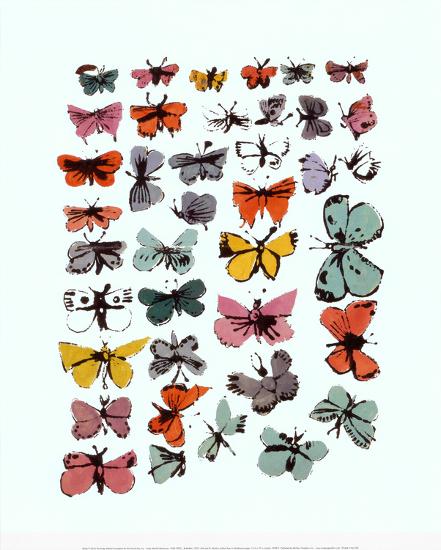
Project: Oil pastel butterflies 

Elements of Art - Line, Shape, Color, Space


We are continuing to fill in the butterfly shapes with oil pastels.  Once complete, they will be cut out and a black backing glued on. Every butterfly will be attached to thread and hung from ceiling of my classroom. 

Second graders did this last year as well and I love the idea of this being THE second grade project that the first graders look forward to doing.  They are just lovely to look at as they slowly turn in the breeze of the air-conditioning ;)

Image result for andy warhol butterflies


GRADE 3
Project:  Hand Study Holding a Shell;  Contour Rose Drawing

Elements of Art - Line
    Tuesday and Wednesday, students continued to work on Blind Contour Drawings of their hand, but this time, holding a small shell.


    Albrecht Dürer
    Self-portrait, Study of a Hand and a Pillow (recto); Six Studies of Pillows( Verso)
    1493
    https://www.metmuseum.org/art/collection/search/459214
     https://www.khanacademy.org/humanities/renaissance-reformation/northern/durer/v/tipping-point  
      

    On Thursday and Friday, students used their freshly honed, blind contour drawing skills to draw a rose.  Each of the eleven tables in my class had a rose to draw.  (one rose for three students at a table).
    I paced nervously as they began, hoping that all of our drawing studies were going to pay off......and they did!   They did a fantastic job.

    Blind contour drawing is a really difficult concept to grasp at first.  I kept reminding them that this would be the first thing they would learn in a college level drawing course.

     I'm so proud of them.  :)

THE PRINCIPLES OF DESIGN - HOW WE ORGANIZE ART and LIFE

Wk 10 VIDEO Link As we all have been spending much more time at home, you may have also spent a little more time organizing your living sp...